

- Учитель: Helten Ira
- Учитель: Ullrich Maria
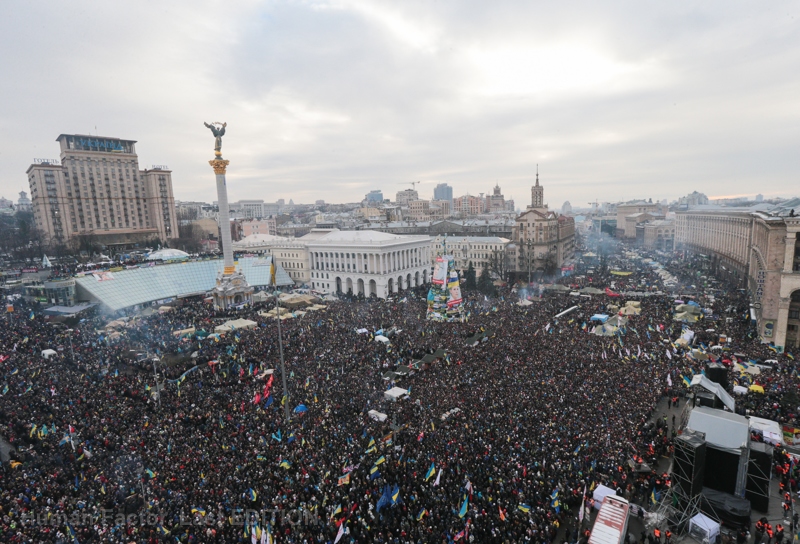
Russian Hybrid Warfare against Ukraine, 1991–2013/2014 - Wintersemester 2026/2027
The annexation of Crimea and the military conflict in Eastern Ukraine, which evolved in 2014 following the Euromaidan protests, were widely perceived, especially from abroad, as a sudden and unexpected crisis between Russia and Ukraine. This was, however, only the next military dimension of Russia’s long-lasting pressure on Ukraine since the proclamation of its independence in 1991. Post-communist Ukraine was heavily influenced by Russia at the political, economic, and cultural levels. This sustained pressure can be characterised as Russian hybrid warfare against Ukraine, through which Russia tried to keep Ukraine within its sphere of influence by all means. This seminar examines the multiple instruments of control that Russia employed before initiating open military conflict. These include the status of Crimea and the stationing of the Russian Black Sea Fleet; the transfer of Ukraine’s nuclear arsenal to Russia under the 1994 Budapest Memorandum; asymmetrical economic relations; Ukraine’s structural dependence on Russia’s energy supplies; information warfare; and Russia’s direct involvement in Ukraine's domestic politics, most visibly during the Orange Revolution of 2004 and Euromaidan protests of 2013/2014. Russia’s cultural expansion in the former Soviet republics, with the promotion of the idea of the so-called ‘Russian World’ (russkij mir) centered on the Russian language, culture, and Orthodoxy, also played a significant role. The course is chronologically and partially thematically organised, drawing on diverse sources and recent scholarly literature in political science, security studies, and history, and sheds light on the pre-history of the ongoing Russian war against Ukraine.
- Учитель: Chernii Kateryna
My voice can convey intentions, emotions, identity - Wintersemester 2026/2027
We all have distinct voices and use our vocal apparatus from early childhood onwards. In the seminar, we will focus on auditory patterns as well as articulatory features that help us communicate effectively with others. As is well known, our voice can also be used for emotional conversations (face-to-face or online). Students will learn about research into identity based on vocal characteristics (primarily from sociolinguistics, applied linguistics and sociophonetics).
tuesday 14:00-15:30 hrs room 204 at Collegium Polonicum, taught by Prof Nicole Richter
- Учитель: Richter Nicole
Individuelle Mehrsprachigkeit: von Herkunftssprache und Zweitsprache - Wintersemester 2026/2027
MA-SEMINAR >Fragen zu HERKUNFTSSPRACHE und ZWEITSPRACHE werden in der Sozio- und Varietätenlinguistik und der Angewandten Sprachwissenschaft erforscht. Wir werden anhand konkreter Migrationsprozesse die Sprachsituation in Familien, Schule und im Berufskontext beleuchten. Der in Studien beschriebene "Verlust" von Sprachen (language attrition) soll von den Studierenden selbstständig datenbasiert diskutiert werden, was auch als Grundlage für Masterarbeitsthemen dienen kann. MONTAGS 14:00-15:30 Uhr, Collegium Polonicum/CP 102
Dozentin: Prof. Dr. Nicole Richter
- Учитель: Richter Nicole

Language, Migration, and Social Media - Wintersemester 2026/2027
Social media platforms such as WhatsApp, Instagram, Snapchat or TikTok have become ubiquitous in everyday life. They not only allow people to connect across distances but also provide new ways of performing identities, expressing different kinds of meanings, thinking in new ways, building online/offline communities and facilitating social relationships. This seminar aims to equip students with the theoretical and methodological tools necessary to study language practices in social media from a sociolinguistic and linguistic anthropological perspective. In particular, we will focus on the role of social media in the everyday lives of migrants. After establishing theoretical foundations on multilingualism, communicative repertoires, migration and social media, we will examine recent research on digital practices among transnational families, identity performances on social media, the role of these platforms in language change and community formation. Students will be encouraged to bring their observations and social media data for class discussion. Participants who wish to obtain 6 or 9 ECTS are expected to present a case applying the theoretical and/or methodological approaches discussed in the class.
- Учитель: Leblebici Reyhan Didem
Kämpfe um Kunst in Europa: Protestbewegungen und ihre Ästhetik - Wintersemester 2026/2027
Tanzperformances im Rahmen feministischer Streiks, Kartoffelbreiwürfe auf berühmte Gemälde durch Klimaaktivist*innen, Auseinandersetzungen um die Berlinale im Kontext der Palästina-Proteste oder die Instrumentalisierung von KI-generierten Bildern und Videos durch rechte Bewegungen: Kunst ist längst wieder zu einem politischen Kampffeld in Europa geworden. Rechte wie linke Bewegungen nutzen ästhetische Mittel, um Aufmerksamkeit zu erzeugen und politische Deutungsmacht zu erringen. Das Seminar geht der Frage nach, ob Kunst heute ein emanzipatorisches Mittel politischen Protests sein kann, oder ob sie regressiv zu werden droht.
Wir nähern uns dieser Frage zunächst über die philosophische Debatte, ob Kunst einem politischen Zweck dienen sollte, oder ob gerade ihre Autonomie ihre politische Kraft ausmacht (Block 1). In einem zweiten Schritt, analysieren wir, unter welchen Bedingungen Kunst progressiv sein kann, und wann sie in kapitalistischen Verhältnissen in Ideologie abgleitet (Block 2). Schließlich richten wir unseren analytischen Fokus auf soziale Bewegungen selbst, ihre Aneignung von Kunst sowie ihre eigenen ästhetischen Praktiken. Wir analysieren konkrete Beispiele aus progressiven Bewegungen im Bereich Klima und Migration (Block 3) sowie aus heutigen rechten Bewegungen mit Fokus auf deren Nutzung von KI und digitalen Plattformen (Block 4). Neben der Lektüre zentraler Texte arbeiten wir mit aktuellen Fallstudien, diskutieren Kunstwerke und Performances und erproben kreative Formate wie die gemeinsame Analyse von Bildern und Videos sowie den Besuch von Ausstellungen.
- Учитель: Ullrich Vanessa Lara
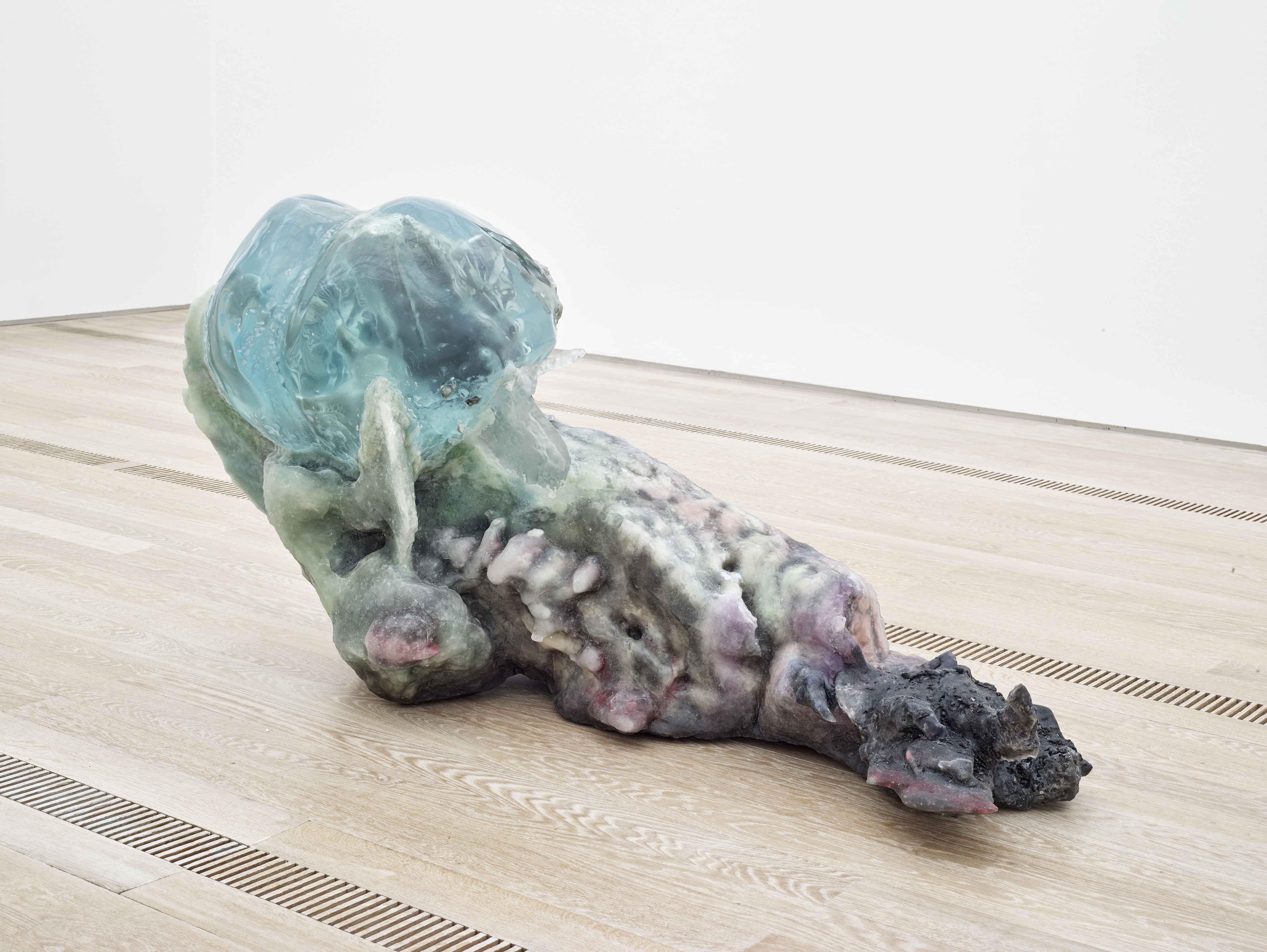
From Automatism to Algorithm: Surrealism and its Critical Legacies - Wintersemester 2026/2027
Officially founded in1924, with the publication of André Breton’s manifesto, Surrealism has been exerting a lasting influence in art, culture and theory and continues to prompt a host of responses in our anxiety-ridden present. Influenced by communism and psychoanalysis alike, the movement’s aesthetics and aspirations were mainly grounded in the notion of “pure psychic automatism” as a method of representing, in both literature and the visual arts, the desires, dreams and drives of the human “unconscious” as revolutionary forces to challenge the bourgeois order of an industrial modernity deemed repressive (if not worse). Practices of écriture automatique, i.e. modes of writing or drawing performed without conscious control and intent, aimed at liberating rational Western subjectivity through access to a projected Other and primordial past.
On the one hand the seminar will revisit the history of Surrealism in the works and words of, among others, Breton and Georges Bataille, Max Ernst, Man Ray, Yves Tanguy, André Masson, Salvador Dalí, Meret Oppenheim, Claude Cahun and Raoul Ubac, to critically engage with the politics (and aporias) of automatism and its multi-faceted manifestations. On the other hand, this course will take a more experimental approach by focusing on legacies of Surrealism in contemporary art and digital media culture, asking how its historical quest for both the marvelous and the uncanny with recourse to the unconscious is transformed by automatism becoming algorithmic. To this end, readings by philosophers and scholars like N. Katherine Hayles and Marie-Luise Angerer relative to the “digital unconscious” as a terrain where bodies and computation meet will be discussed in light of recent works by artists like Pierre Huyghe, Adrian Villar Rojas, Hito Steyerl and Annika Yi that arguably gauge and exacerbate the vicissitudes of imagining the “the world through AI”.
- Учитель: Klich Camilla
- Учитель: Rottmann Andre
The 250th Anniversary of the United States of America - Wintersemester 2026/2027
Die Lehrveranstaltung in englischer Sprache widmet sich aus Anlass des 250. Gründungsjahres der USA der Darstellung und Analyse der sozial-philosophischen Grundlagen der Vereinigten Staaten von Amerika und der maßgeblichen, diese prägenden politischen Ideen und Theorien. Der Kurs hebt an mit den im Geiste der Aufklärung geschaffenen konstitutionellen Fundamenten des US-Amerikanischen Gemeinwesens, seinen republikanischen und föderativen Prinzipien. Anschließend werden die das 19. Jahrhundert bestimmenden US-außenpolitischen Vorstellungen (Monroe-Doktrin) und der entscheidende innenpolitische Konflikt um Freiheit versus Sklaverei (Präsident Lincoln) nachgezeichnet. Das Amerikanische 20. Jahrhundert wird beleuchtet im Spannungsbogen von Präsident Roosevelts New Deal, den Demokratie- und Medientheorien von John Dewey und Walter Lippmann, der außenpolitischen Strategie von George Kennan, die liberal-globale Vision von Francis Fukuyama. Die gesellschaftstheoretischen Debatten der letzten Jahrzehnte bis zur Gegenwart oszillieren zwischen links-liberalen Theorien (John Rawls, Michael Walzer), libertären, radikal wirtschaftsliberalen Auffassungen (Robert Nozick) und wertkonservativen, anti-liberalen Gesellschaftsvorstellungen (Patrick Deneen), die in der heutigen Trump-Administration ihren politisch-strategischen Widerhall finden.
- Учитель: Wegmarshaus Gert Ruediger
- Учитель: Wolff Mady
Queer identities online - Wintersemester 2026/2027
This course focuses on online identity performances that challenge hegemonic views of gender and sexuality, asking questions like: How are queer identities performed and negotiated in digital settings? Is the Internet a liberating technology for queer visibility? What forms does queerphobia take online? We will approach these questions from the perspective of queer linguistics, informed by research on identity construction in digitally mediated communication. Through discussions of published work and in-class analyses we will engage with issues of algorithmic mediation and platform affordances, online community building, social media policies, and hate speech.
- Учитель: Ntouvlis Vinicio
Language/s and the body in interaction - Wintersemester 2026/2027
MA seminar with Dr Dorothée Kraus: In this seminar, we are going to explore how the body and verbal language together shape meaning-making processes in multilingual interactions. The seminar will be divided into three thematic parts: a theoretical part, an introduction to qualitative empirical research, and a hands-on research project. Theoretically, we will discuss texts from the fields of multilingualism, interactional linguistics, and multimodality and gesture studies. Methodologically, we will discuss approaches to qualitative research with a focus on working with video data. At the end of term, you will be ready to present your own research project at a student conference. This student conference will be held together with the course “Language – Body – Machine” on 5.2.2027. By the end of this seminar, you will have an understanding of the theoretical foundations of empirical work and of multilingualism in interaction. FRIDAY 11:15-12:45 hrs
- Учитель: Kilian Jasmina
- Учитель: Kraus Dorothee
- Учитель: Richter Nicole